On being a psychotherapist with an ethical sense
Veridiana Tancău ● 3rd July 2026
Coincidentally (or not), my last university exam was in Applied Ethics in Psychology.
I don't think it's an exaggeration to say that, lately, the psychotherapy profession hasn't exactly enjoyed a stellar reputation. I am speaking, of course, in light of the accusations of abuse brought against so-called psychotherapists (with or without a degree), the news about the psychologist who stole a €175,000 watch from a millionaire, and the members of the COPSI (Romanian Psychologists Association) leadership involved in conflicts of interest. Clearly, such news does not help us, especially since it builds upon a pre-existing stigma surrounding the profession - particularly from the generations preceding mine, raised in a collective mentality of fear of disclosure and general mistrust.
Returning to the last exam, it covered the Psychologists' Code of Ethics - a manual drafted by the Deontology and Discipline Committee of the Romanian College of Psychologists, whose role is to uphold ethical standards among psychologists and investigate professional misconduct. Every psychologist should read and follow this code, which dictates what is acceptable and (more relevant and much easier to overlook nowadays) what is NOT acceptable to do in their practice.
A first question might be: "But do we really need a code to tell us what to do?" Some philosophers would say no, because human beings are fundamentally good. Reading some standards in the Code of Ethics, you cannot help but notice that they are indeed "logical," if "logical" means something that respects the morality of common sense. Let me give you an example:
Avoiding Harm (Non-Maleficence)
Art. III.8. Psychologists will protect and promote well-being, avoiding causing harm to clients, students, research participants, colleagues, and others, responsibly accepting the consequences of their own actions.
It is quite clear (again, assuming common-sense morality) that it is not okay to harm others, regardless of your profession. For such "self-evident" standards, I believe the issue is not one of knowing the code, but rather how you choose to interpret it. What constitutes "harm"? What does "avoiding harm" really mean? Of course, given their ambiguous nature, all these constructs can be relativized according to the reader's whims and convenience. Thus, a second question arises: "Okay, but how do I interpret all these standards to make sure I am not doing harm?"
Here is another example of a standard:
Avoiding Abuse
Art. IV.16. Psychologists will avoid extraprofessional relationships with their clients. These relationships reduce the necessary professional distance and can lead to a conflict of interest or abuse.
Some might say that grabbing a coffee with a client every now and then does not amount to an extraprofessional relationship in the true sense of the word. Others argue that the rule shouldn't even apply to fulfilling a client's wish to attend their wedding and their child's baptism (based on a true story). Where do we draw the line, then? Only where it benefits us for it to exist?
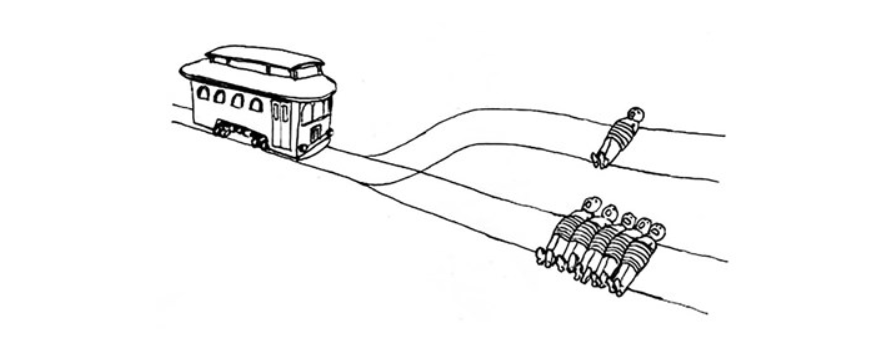
Kant's Categorical Imperative urges us to act according to rules we would wish to become universal. That means you can go out for coffee with your client if you consider it logical and rational for all therapists in the world to go out for coffee with their clients (do you?). You can lie to a client if you truly believe it is logical and rational for all therapists to lie to their clients. If you don't believe that, it means what you want to do is immoral.
"Fair enough," the person who had the attention span to read up to this point might say. "But we can't think in such extreme terms. For some clients, my refusal to have a simple coffee with them could completely shatter their self-confidence—the very confidence we've been struggling for so long to build. For others, I need to resort to white lies to protect them." It is true that it is very easy to justify all sorts of transgressions to ourselves and to the whole world. We say, "I didn't refuse the client's invitation for coffee because I don't want to hurt their inner child and deepen their abandonment wound." We don't say, "I am getting coffee with the client because their attention validates me and makes me feel like a miniature healing god." Yet, the two go hand in hand.
Unlike Kantian ethics, utilitarianism tells us that an action is moral if it maximizes happiness and reduces suffering for the greatest number of people. I go out for coffee with the client if I know how much they would suffer from my refusal. I can sometimes lie to them if I know the answer they hear will reduce their suffering. Therefore, for the sake of their well-being, I occasionally bend the rules.
The problem with utilitarianism is that it involves a very high degree of subjectivity. The problem with Kantianism is that it leaves no room for subjectivity. The problem for psychologists is that we are condemned (or destined?) to permanently inhabit the space between the two.
The answer to this dilemma depends, like everything else related to psychology, on context. However, I believe this code is not written to actually stop the psychologists who would steal expensive watches or exploit their leadership positions for financial gain (spoiler alert: they will most likely continue to violate the code in one way or another anyway). Rather, the code should be seen as an invitation to constant self-reflection on our own blind spots and the justifications we give ourselves to overlook them. As psychologists, we are experts in all sorts of defenses and rationalizations, each more deeply rooted than the last in the pretext of devotion to the profession. We also tend to assume the role of an untouchable healer who doesn't even need rules, because "they know what they're doing" / "it works either way" (merge și-așa).
Well, in the land of "it works either way," abuse of all kinds happens on a daily basis. Alcoholism is a national issue that is disturbingly accepted by society, and the word "psychotherapy" is foreign to those who perhaps need to hear it most. People do not trust others enough to open up. The profession of psychologist is still stigmatized, and it will continue to be so if psychotherapists don't take a close (or closer) look at themselves, acknowledge their limitations, and—to the extent they can—work on them.
That's what the standard says too, doesn't it?
Recognizing Professional Limits
Art. IV.1. Psychologists will be reflective, open, and aware of their personal and professional limits. And
Continuous Training
Art. II.8. Psychologists have a duty to act, throughout the duration of their professional practice, toward developing and practicing their own professional competencies at the highest possible standards.
Nowhere, but especially here, does "it works either way" apply.